Introduction
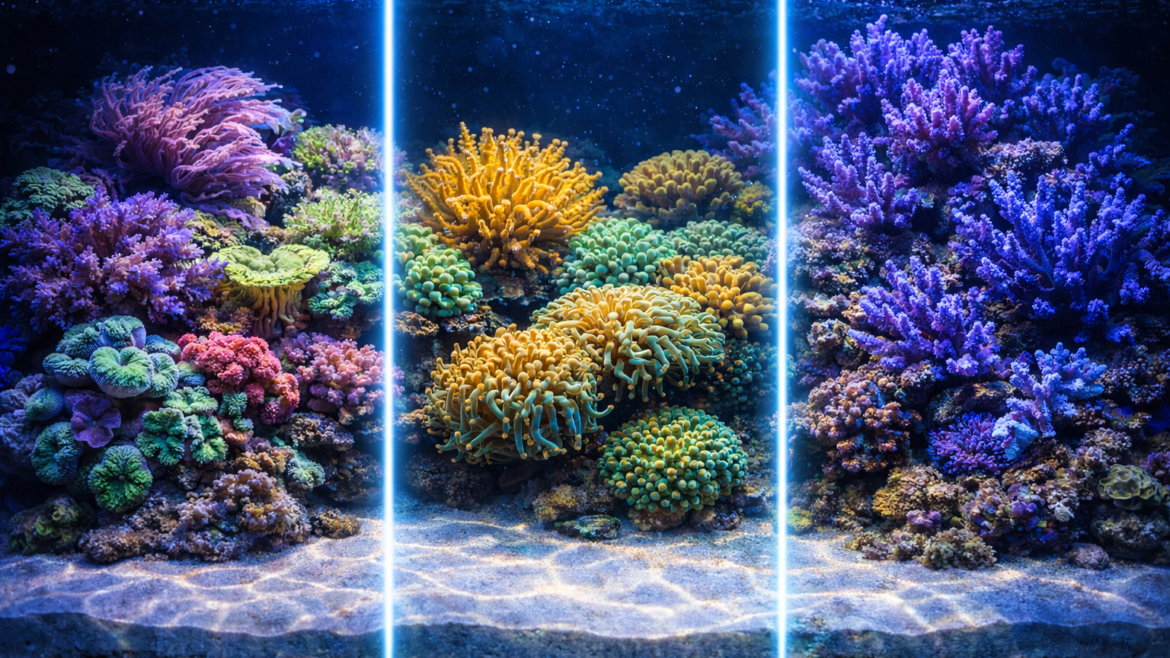
Walk into any coral shop and the variety is overwhelming. Branching acropora in electric purple. Torch corals swaying like underwater flames. Leather corals pulsing slowly in the current. Zoanthids in colors that look almost artificial.
Every one of these falls into one of three broad categories — SPS, LPS or soft corals — and the category matters more than most beginners realise. The coral type you choose dictates your lighting requirements, your water chemistry precision, your equipment budget and how much margin for error you have on any given week.
Choose the wrong category for your experience level or equipment and you will spend a lot of money watching coral slowly decline. Choose the right one and you will have a thriving reef that grows with you as your skills develop.
This guide breaks down everything you need to know about all three coral types — what they are, what they need, what they cost, and which one is right for where you are right now.
Understanding the Basics: What Do SPS, LPS and Soft Corals Actually Mean?
SPS — Small Polyp Stony Corals
SPS corals build a hard calcium carbonate skeleton covered by a thin layer of living tissue containing millions of tiny polyps — each polyp less than a few millimetres across. The skeleton is what remains when coral dies, and it is what forms the structural backbone of natural reef systems.
Common SPS genera include Acropora, Montipora, Pocillopora, Stylophora and Seriatopora. These are the corals you see in photographs of wild reefs — branching, plating, encrusting forms in every color imaginable.
SPS corals are primarily photosynthetic, deriving most of their energy from light through their symbiotic zooxanthellae algae. They are also the most demanding corals to keep — requiring intense, consistent light, extremely stable water parameters and very low nutrient levels.
LPS — Large Polyp Stony Corals
LPS corals also build a calcium carbonate skeleton, but their polyps are dramatically larger — from a few centimetres to over 30cm across in some species. The larger polyp size means more surface area for feeding and a greater capacity to capture food particles from the water column.
Common LPS genera include Euphyllia (torch, hammer, frogspawn), Trachyphyllia (open brain), Lobophyllia, Acanthastrea, Blastomussa and Cynarina. These are the corals that create the flowing, organic texture of a mixed reef — fleshy, colorful and visually dramatic.
LPS corals are more forgiving than SPS in terms of parameter stability, tolerate moderate nutrients and benefit significantly from target feeding. They sit in the middle of the difficulty spectrum — more demanding than softies, but far more accessible than SPS.
Soft Corals
Soft corals do not build a calcium carbonate skeleton. Instead they are supported by small calcium structures called sclerites embedded in their tissue, giving them a flexible, fleshy form that sways with water movement.
Common soft coral genera include Sarcophyton (leather corals), Lobophytum, Sinularia, Cladiella (finger and toadstool leathers), Discosoma (mushroom corals), Rhodactis, Ricordea, Zoanthus and Palythoa (zoanthids and palythoa).
Soft corals are the most forgiving category — tolerating a wide range of lighting, moderate to elevated nutrients and the minor parameter fluctuations that are inevitable in newer systems. They grow quickly, propagate easily and provide instant visual impact even in a young tank.
Soft Corals: The Beginner’s Best Friend
What makes soft corals ideal for beginners
Soft corals are the natural starting point for any new reef keeper — not because they are boring or a compromise, but because they give you the space to learn reef keeping without a constant stream of expensive losses.
The characteristics that make them forgiving are directly related to their biology. Without a calcium carbonate skeleton to build, they have lower and less critical requirements for calcium and alkalinity. Without the extreme sensitivity of SPS tissue, they tolerate the parameter swings that are almost inevitable in systems under 12 months old.
Water parameters for soft corals
| Parameter | Target Range |
|---|---|
| Temperature | 75–80°F (24–27°C) |
| Salinity | 1.024–1.026 |
| pH | 8.0–8.3 |
| Alkalinity | 7–10 dKH |
| Calcium | 380–450 mg/L |
| Nitrate | up to 20 ppm tolerated |
| Phosphate | up to 0.1 ppm tolerated |
The wide tolerance ranges are the key advantage. A soft coral reef can remain healthy through a week of missed water changes, a minor alkalinity swing or a slightly elevated phosphate reading — situations that would visibly stress SPS and cause tissue recession in demanding LPS.
Lighting requirements for soft corals
Most soft corals thrive at 50–150 PAR — moderate light intensity that virtually any quality LED fixture can deliver across a standard tank depth. You do not need to push your light to maximum output or position it at minimum height above the water. This also means your electricity costs are lower and your coral has more room to adapt as you dial in your schedule.
Mushroom corals (Discosoma and Rhodactis) are among the most shade-tolerant corals in the hobby — they can thrive in the shadows created by overhanging rock where other corals would fail. Zoanthids are similarly adaptable, growing happily across a wide PAR range.
Flow requirements for soft corals
Soft corals prefer gentle to moderate, random flow — enough to keep their tissue gently swaying and deliver food and oxygen, but not so intense that polyps remain permanently retracted. Leather corals in particular will remain closed for days if flow is excessive. Target 10–20 times tank volume per hour in total circulation for a softie-dominated system.
Popular soft coral species for beginners
Mushroom corals (Discosoma) — extremely hardy, propagate rapidly by splitting, available in dozens of color morphs. The perfect first coral for any new tank.
Green Star Polyps (GSP) — fast-growing mat coral with bright green polyps. Almost impossible to kill and provides instant coverage of rock and back glass.
Toadstool Leather (Sarcophyton) — iconic and impressive. Grows large, tolerates almost anything and regularly sheds its outer layer as it grows — a normal process that alarms many beginners.
Zoanthids and Palythoa — available in extraordinary color variety. Hardy, fast-growing and highly rewarding. Note: some species contain palytoxin — always wear gloves when handling and never expose to heat or acid.
Xenia — pulses rhythmically in a way that is mesmerising to watch. Grows extremely fast — sometimes too fast, requiring regular pruning to prevent it overrunning other corals.
Equipment needed for a soft coral reef
- Any quality LED fixture delivering 50–150 PAR at coral level
- Protein skimmer (optional for nano, recommended for 30+ gallons)
- Basic circulation with powerhead or wavemaker
- RO/DI water for mixing and top-off
- Manual testing with basic test kit (alkalinity, calcium, salinity, nitrate)
- No dosing pump required in most cases — water changes sufficient to replenish parameters
Cost to set up: Lowest of the three categories. A functional soft coral reef can be established with a mid-range LED, basic filtration and manual water changes.
LPS Corals: The Sweet Spot of Reef Keeping
What makes LPS the most rewarding category
LPS corals occupy the sweet spot that experienced reefers often describe as the most enjoyable tier of reef keeping. They are visually spectacular — the flowing tentacles of a torch coral, the geometric perfection of an open brain, the flaring skirts of a hammer coral are among the most beautiful things in the hobby. They are responsive to target feeding in a way that feels almost interactive. And they are achievable without the extreme equipment investment or parameter precision that SPS demands.
Many experienced reefers who started on softies move to a dedicated Euphyllia garden — a tank dominated by torch, hammer and frogspawn corals — and never feel the need to go further. LPS reef keeping at its best is deeply satisfying without being punishing.
Water parameters for LPS corals
| Parameter | Target Range |
|---|---|
| Temperature | 76–79°F (24–26°C) |
| Salinity | 1.025–1.026 |
| pH | 8.1–8.3 |
| Alkalinity | 8–9.5 dKH |
| Calcium | 400–440 mg/L |
| Magnesium | 1280–1350 mg/L |
| Nitrate | 5–20 ppm (some species prefer moderate nutrients) |
| Phosphate | 0.05–0.1 ppm |
The critical difference from soft corals is that LPS corals actively build calcium carbonate skeletons — which means calcium and alkalinity consumption is real and must be replenished. In a heavily stocked LPS system, manual water changes alone may not keep up with calcium and alkalinity demand, making a dosing pump a practical consideration.
Lighting requirements for LPS corals
Most LPS corals thrive at 100–250 PAR — moderate to moderately high intensity. This is well within the capability of quality LED fixtures at standard mounting heights. The key is placement within the tank: most LPS should be positioned in the lower to middle sections of the aquascape, away from direct peak PAR zones.
Euphyllia corals (torch, hammer, frogspawn) are notably photoadaptive — they will extend their tentacles maximally at moderate PAR and retract if light is too intense. Watch for tentacle extension as your indicator of light comfort.
Flow requirements for LPS corals
LPS corals need moderate, indirect flow — enough to gently move their tentacles and deliver food, but never direct high-velocity flow that causes them to retract or damages their tissue. Euphyllia corals are particularly sensitive to direct flow — always position powerheads so the flow deflects off rock or glass before reaching the coral.
Target 15–25 times tank volume per hour in total circulation, with flow pattern designed to be random and multidirectional rather than a single directed stream.
Feeding LPS corals
This is where LPS reef keeping becomes genuinely interactive. LPS corals have large, capable feeding tentacles that actively capture and consume meaty foods. Regular target feeding accelerates growth, improves coloration and supports coral health in ways that light alone cannot.
Effective LPS foods include Mysis shrimp, enriched brine shrimp, reef roids, coral frenzy and small krill. Use a pipette or turkey baster to deliver food directly to extended tentacles — once per week to twice per week is ideal for most species. Turn off circulation pumps for 10–15 minutes after feeding to allow coral to capture food before it disperses.
Popular LPS species
Torch coral (Euphyllia glabrescens) — the most popular LPS in the hobby. Long flowing tentacles in gold, green and ultra-rare colors. Fast-growing with stable parameters.
Hammer coral (Euphyllia ancora) — hammer-shaped tentacle tips, branching or wall growth forms. Extremely rewarding and propagates readily.
Frogspawn (Euphyllia divisa) — similar to hammer but with divided tentacle tips. Often more tolerant of moderate nutrients than other Euphyllia.
Open Brain coral (Trachyphyllia) — lies flat on the sand bed, dramatic fleshy appearance, excellent feeder. One of the most visually striking LPS species.
Blastomussa — small, dome-shaped polyps that encrust rock slowly. Extremely hardy, tolerates low light and moderate nutrients.
Duncan coral (Duncanopsammia) — fast-growing, colonial LPS with long green tentacles. One of the easiest LPS to keep and propagate.
Equipment needed for an LPS reef
- Quality LED fixture delivering 100–250 PAR at coral placement depth
- Protein skimmer — strongly recommended
- Wavemaker for random, indirect flow
- RO/DI water system
- Regular testing — alkalinity twice weekly minimum
- Dosing pump recommended for mature, heavily stocked systems
- Basic aquarium controller for temperature and pH monitoring
Cost to set up: Moderate. The jump from soft corals is primarily in lighting quality and the addition of a dosing pump as the system matures.
SPS Corals: The Advanced Reef
What makes SPS both the most challenging and most rewarding
SPS reef keeping is where the hobby becomes genuinely technical. The margin for error is narrow, the equipment investment is significant and the learning curve is real. But the result — a mature SPS reef with branching acropora colonies in electric colors, plating montipora spreading across the rockwork, the shimmer of high-intensity LED light dancing over a forest of coral — is unlike anything else in the hobby.
Experienced SPS reefers describe their tanks as an addiction. Once you understand the system, once parameters are truly dialled in and growth is visible week to week, the challenge becomes its own reward.
Water parameters for SPS corals
| Parameter | Target Range |
|---|---|
| Temperature | 77–79°F (25–26°C) |
| Salinity | 1.025–1.026 |
| pH | 8.2–8.4 |
| Alkalinity | 8–9 dKH — stability critical |
| Calcium | 420–450 mg/L |
| Magnesium | 1300–1380 mg/L |
| Nitrate | 1–5 ppm (ultra-low nutrient) |
| Phosphate | 0.03–0.08 ppm |
The critical word with SPS parameters is stability. An SPS coral can tolerate alkalinity at 7.5 dKH if it has always been at 7.5. What it cannot tolerate is swinging between 7.5 and 9.5 across a week. Rapid parameter changes — even within the acceptable range — cause RTN (rapid tissue necrosis) and STN (slow tissue necrosis), the two most devastating coral diseases in the hobby.
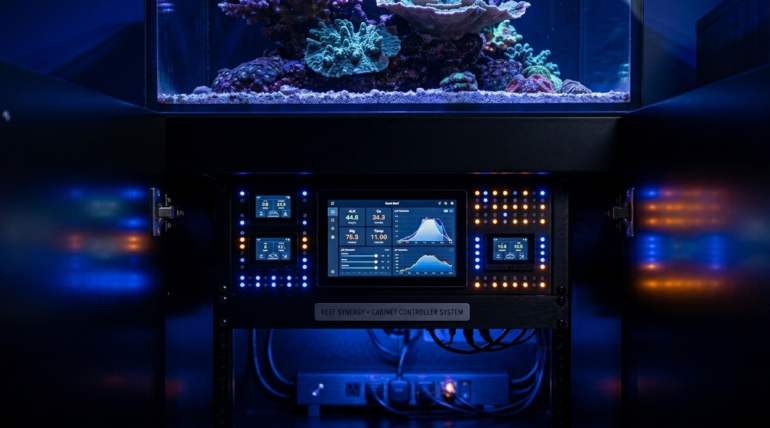
This is why dosing pumps, automated testing and aquarium controllers are not optional luxury items in an SPS system. They are the infrastructure that makes SPS reef keeping sustainable.
Lighting requirements for SPS corals
SPS corals — particularly acropora — require 250–450+ PAR at coral placement. This demands high-output LED fixtures mounted at appropriate heights, with PAR maps understood and verified with a PAR meter.
The spectrum also matters more for SPS than for other coral types. Acropora in particular responds visibly to UV and violet wavelengths — corals under well-balanced full-spectrum lighting with strong UV show dramatically better coloration than the same coral under blue-only light.
Top LED choices for SPS: EcoTech Marine Radion XR15 G6 Pro, AI Hydra 64 HD, Kessil A360XE. These are not budget products — they are tools that genuinely deliver the output and spectrum that SPS demands.
Flow requirements for SPS corals
SPS corals require strong, random, multidirectional flow — significantly more than LPS or soft corals. Natural reef crests where acropora dominates experience flow rates equivalent to 50–100 times the water volume per hour. In a home aquarium, targeting 30–50 times tank volume is more realistic but the principle is the same: strong, turbulent flow with no dead spots.
High-quality wavemakers — EcoTech Marine VorTech, Tunze Turbelle — are the standard for SPS systems. These produce the pulsing, random flow patterns that stimulate coral growth and prevent detritus from settling on sensitive tissue.
The nutrient question in SPS tanks
SPS corals — particularly acropora — perform best at extremely low nutrient levels. Elevated phosphate inhibits calcification (skeleton building) and causes the zooxanthellae density to increase, which paradoxically causes coral to appear brown rather than showing its natural colors. The famous “tank of the month” acropora colors — electric blues, greens, purples — are only achievable at very low phosphate.
This creates a genuine challenge: low nutrients are good for coral color but can stress fish and other inhabitants. Managing the balance between low nutrients for SPS and adequate nutrients for fish requires a combination of protein skimming, refugium, careful feeding and consistent parameter monitoring.
Equipment needed for an SPS reef
- High-output LED fixture with verified PAR map — budget $400–600+ per fixture
- High-performance protein skimmer rated well above tank volume
- Aquarium controller — essential, not optional
- Automated dosing pump for calcium, alkalinity and magnesium
- High-flow wavemakers
- Automated alkalinity testing (GHL KH Director, Neptune Trident, Reef Factory KH Keeper) — strongly recommended
- RO/DI system — 0 TDS non-negotiable
- PAR meter for light calibration
- Comprehensive test kit or ICP water analysis quarterly
Cost to set up: Highest of the three categories by a significant margin. A properly equipped SPS system is a genuine investment.
Side-by-Side Comparison
| Soft Corals | LPS Corals | SPS Corals | |
|---|---|---|---|
| Difficulty | Beginner | Intermediate | Advanced |
| Parameter stability needed | Moderate | High | Critical |
| PAR requirement | 50–150 | 100–250 | 250–450+ |
| Flow requirement | Low–moderate | Moderate | High |
| Dosing pump needed | Rarely | Sometimes | Almost always |
| Controller needed | Optional | Recommended | Essential |
| Feeding required | No | Yes — weekly | Minimal |
| Nutrient tolerance | High | Moderate | Very low |
| Setup cost | Low | Moderate | High |
| Growth speed | Fast | Moderate | Slow–moderate |
| Visual impact | High | Very high | Extraordinary |
Which Should You Choose?
Choose soft corals if:
- Your tank is under 12 months old
- You are still learning parameter management
- Your equipment budget is limited
- You want fast growth and quick visual results
- You cannot commit to twice-weekly testing
Choose LPS if:
- Your system has been stable for 6+ months
- You enjoy the interactive aspect of target feeding
- You want dramatic visual impact without extreme equipment investment
- You are ready to add a dosing pump as your system matures
- The Euphyllia aesthetic appeals to you
Choose SPS if:
- Your system has been stable for 12+ months with verified parameters
- You have invested in quality lighting, a controller and automated dosing
- You are genuinely interested in the technical aspects of reef keeping
- You are willing to test parameters multiple times per week
- The acropora aesthetic is your ultimate goal
A practical path forward
Most successful reef keepers follow a natural progression: soft corals → LPS → SPS. Each stage teaches you the skills and gives you the infrastructure needed for the next. Rushing this progression is the most expensive mistake in the hobby — not because the coral is complex, but because you will not have the system stability or the experience to keep them alive.
Start with softies. Master your parameters. Add LPS when your system is genuinely stable. Graduate to SPS when your alkalinity has not swung more than 0.5 dKH in a month.
The reef will still be there. The coral will still be beautiful. Take your time.
Ready to choose your first corals? Browse our full range of reef equipment — from beginner-friendly LED lighting to advanced SPS dosing systems — at Malta Sea.